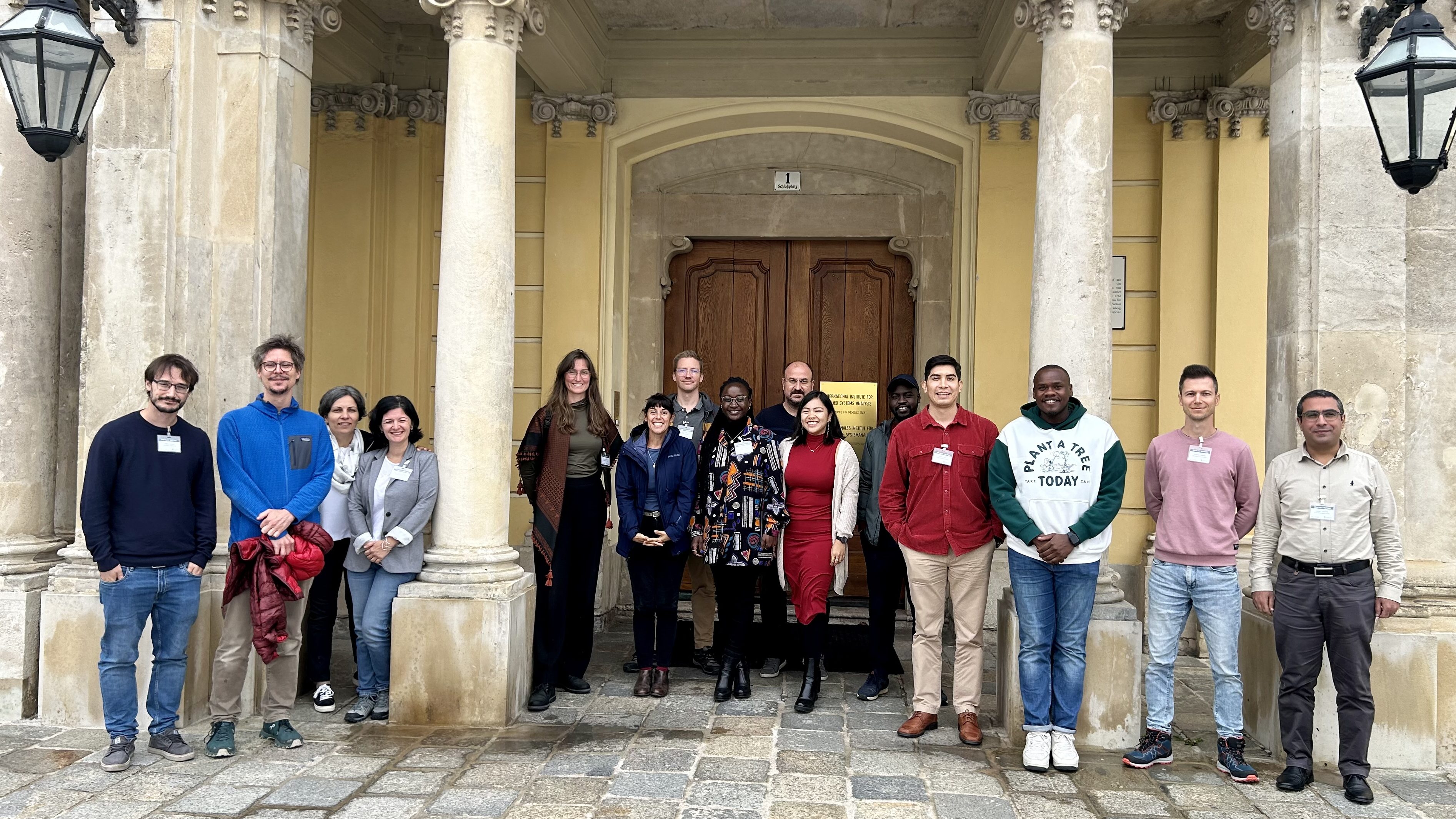
Amidst the heavy rains and gusty winds in Vienna, the PROCLIAS Working Group 4 (WG4) consisting of 20 members gathered from September 12th to 13th, 2024 for an inspiring and highly productive workshop at the International Institute for Applied Systems Analysis (IIASA).
Our group members Rhoda Odongo and Heidi Mendoza were there to collaborate on the goal of reflecting on the progress made over the past few years and exploring pathways for translating scientific climate impact (attribution) data into actionable policy frameworks. Despite the challenging weather, the discussions inside were vibrant and crucial for addressing the global climate challenges we face today.

For the drought research group focusing on drought risk and adaptation, this workshop held particular significance. Droughts are among the most severe consequences of climate change, posing complex risks to communities, ecosystems, and economies. Understanding how drought impacts propagate across regions and sectors—and integrating that knowledge into policy—is essential for effective climate adaptation strategies.
The following themes discussed during the workshop are directly relevant to our drought research:
- Multi-Sectoral Impact Assessments: Droughts do not impact a single sector—they affect agriculture, water resources, health, and more. By exploring how multi-sectoral impact assessments (like those from ISIMIP) can inform decision-making processes, we can better understand how to implement holistic drought risk mitigation strategies.
- Climate Litigation: The role of drought attribution studies in climate-related lawsuits is growing. Legal cases related to drought management could benefit from the integration of scientific evidence, holding policymakers and companies accountable for their actions in a changing climate.
- Barriers to Integration: Drought adaptation requires collaboration between scientists, policymakers, and practitioners. Discussions around the barriers to integrating scientific research into policy were particularly valuable. The recommendations from this workshop will help inform our own efforts to promote the use of drought risk data in government and community-level decision-making.
- Public Awareness and Policy Change: Increasing public awareness about the impacts of drought is essential for driving policy change. We discussed how scientific data, including drought risk assessments, can be leveraged to influence policy decisions at various scales—from local to global.
Moving Forward
The workshop was a vital step toward bridging the gap between climate science and policy, particularly for those of us engaged in drought research. The insights gained will directly inform our work on drought risk and adaptation, providing new frameworks and case studies to enhance our approach to policy engagement.
We are now working to draft a perspective piece, which will outline strategies for integrating climate impact data—such as drought risk assessments—into actionable policies. As the workshop demonstrated, collaboration is key. By continuing to engage with stakeholders, policymakers, and scientists across sectors, we can strengthen our collective response to drought and other climate-related risks.
Many thanks to Albert Nkwasa for leading the workshop and for the invitation to participate, and for IIASA for hosting us!
 Hydrological extremes @ Amsterdam
You must be logged in to post a comment.