Over the summer of 2024, our colleague Lotte Muller embarked on an ambitious research project to explore how Dutch boat owners are experiencing the impacts of summer drought. By distributing a survey, Lotte sought to uncover the drought related challenges boaters face and how they perceive these issues. For instance, closed sluis gates can cause increased wait time, malfunctioning bridges can mean routes can become inaccessible and the proliferation of water plants can damage boats. According to the “Verdringingsreeks” (a hierarchy for water-use prioritization), recreational boaters are among the first groups to feel the effects of summer drought and related water-saving measures.
This research is part of the I-CISK project, which aims to improve climate information for drought affected sectors. Lotte, alongside her colleagues Marije Schaafsma, Maurizio Mazzoleni, and Anne van Loon, aims to support better long-term planning as droughts become more frequent. They do this by gathering insights into the consequences of water conservation measures on recreational users, harbours, and related sectors. A key focus of Lotte’s research is understanding how people use climate information and how their pre-existing attitudes and beliefs about climate change shape their interpretation and decision-making.
See below the sluice gates in Spaarndam and Muiden where Lotte conducted parts of her field research.

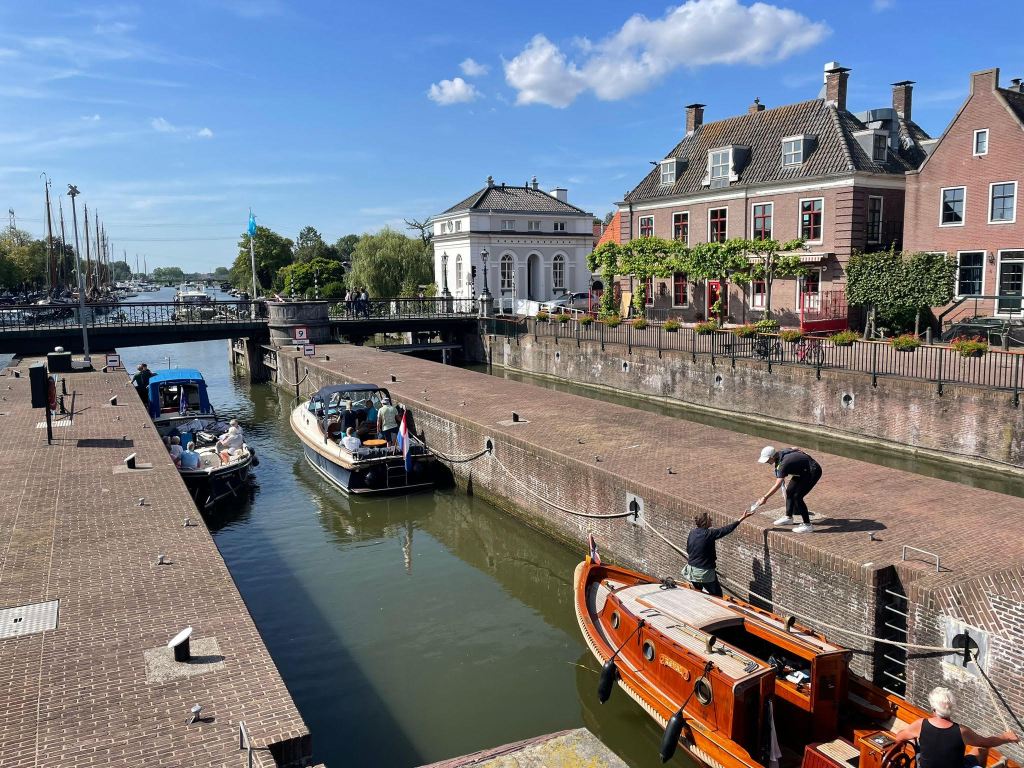
A First Experience in Field Research
This summer marked Lotte’s first experience with field research, moving from office-based work to directly engaging with boat owners at sluis gates. At first, the transition felt daunting:
“What if people don’t see the value of the research? What if they’re unwilling to participate?”
Fortunately, her fears were soon alleviated by the enthusiasm and kindness of boaters, sluis gate managers, and recreational organizations she met along the way.
To date, 250 boat owners from across the Netherlands have participated in the survey, sharing their valuable insights and experiences. We sincerely thank these participants for dedicating their time to this research. This milestone could also not have been achieved without the support of organizations like Hoogheemraadschap van Rijnland, Watersportverbond and Waterrecreatie Nederland, who helped disseminate the survey.
We have a target of 320 survey responses in sight- meaning there is still a chance to fill in the survey. Any assistance in sharing this survey with boat owners in the Netherlands would be greatly appreciated.
Thank you in advance!
 Hydrological extremes @ Amsterdam
You must be logged in to post a comment.